
New Products
Latest News

Nutrien Ag Solutions will add these chlorin-based photosensitizer technology formulations to the Loveland Products lineup in the near future.

Austin Anderson, adjuvant brand manager at Helena, shares his top tips for this year’s spray season and highlights the Helena portfolio of more than 109 adjuvants.

The new flow meter has no moving parts and has been optimized for agricultural application equipment.

On Tuesday, AGI announced it is standardizing its North America grain bin materials, and therefore closing the Grand Island, Neb., manufacturing facility.

IronGate herbicide delivers excellent post-emergent, residual control at a low use rate through its high-efficiency premix formulation of flucarbazone-sodium and pyroxsulam, two leading wheat active ingredients.

Anthem Flex herbicide delivers long residual control and application flexibility in a single product.

“Just putting on more of the herbicide isn’t the answer,” Mark Glady says. “Full rates need to be used with the appropriate adjuvants to ensure the herbicide is delivered to the plant.”

“The goal has always been to provide information to agribusiness staff in an easy, straightforward manner to help them better understand their customers,” said Bushel CEO Jake Joraanstad.

There are at least 30 fungicides labeled for suppression or control of tar spot in corn with a FIFRA 2(ee) recommendation.

Trico Pro, a new, user-friendly wildlife repellent, is now available at Helena Agri-Enterprises retail locations and authorized dealers across the country.

How to identify and estimate hidden farm costs to increase profitability.

“It’s challenging for growers trying to build their herbicide programs right now,” says Wade Firestone, marketing manager with HELM Crop Solutions.
Mancozeb is a highly effective fungicide used to prevent plant diseases across a range of crops.

BioTek Ag, which was based in North Carolina and had been in business for more than 30 years, will become part of Custom Agronomics, a formulator and manufacturer of private-label products.

Gingko Bioworks announced its acquisition of platform assets from AgBioime, which includes over 115,000 fully sequenced and isolated strains, over 500 million unique gene sequences

At the Consumer Electronics Show Bobcat and its parent company Doosan are showcasing a future vision for pushing and lifting power on its line of compact track loaders.

TFI’s Certified Biostimulant program is aligned with the U.S. Biostimulant Industry Guidelines.

The new production line will manufacture all Talc products.
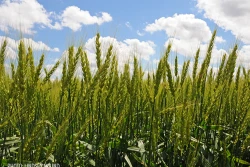
Tolvera recently received registration by the EPA for use on spring and winter wheat, durum and barley.

Grower Compass is a web interface that uses past data to help retailers better understand their customers and business opportunities.

Quickshot is Helena’s newest entrant in the field, which provides seed fluency in addition to crop nutrient package. For 2024, it’s available in limited quantities.

According to the company, the use of PhotoSeed technology has the potential to lower a crop’s carbon intensity score.

During testing, the company found only 4% of CRW larvae chose roots treated with TS201 when given a choice between treated and untreated roots.

Minerva is formulated to control Cercospora leaf spot (CLS), powdery mildew and Ramularia on sugar beets.

Yalos is formulated with two microbes intended to improve nutrient availability and uptake by enhancing early plant growth and branching, as well as microbe establishment in the root zone.

The company says AGMRI Analyze will help growers narrow down what might be limiting their crops’ yield and help them make more informed decisions for next year.

The company sees this new formulation as a potential replacement for liquid seed treatment.

Benefits include reducing crop residue build-up on the soil surface, resulting in improved planting, seed placement, and germination.

The product has an active ingredient of Tymirium to protect plants against nematodes, sudden death syndrome and cotton root rot.

“Innovation and adaptation are core values for us – it’s our intent to always be bringing a new advantage to our farmer-customers that will help them win on every acre,” says Mark Stutsman, COO of Eldon Stutsman, Inc.