
Herbicides

Corteva will pay $35 million to 12 states and accept 10 years of limits on distributor rebates that the FTC says kept cheaper generic pesticides away from farmers. The case against Syngenta continues.

Crop protection, seeds and digital tools could be rolled into a standalone company by middle of next year.

Researchers say a simple combine tweak gives farmers a way to concentrate up to 95% of their toughest weed seeds into just 5% of a field.

Increasing numbers of corn and soybean growers are looking for lower-cost inputs to preserve and protect yields.

The latest product in Corteva’s lineup can go on fields as a pre or post, targets more than 36 broadleaf weeds and grasses, and provides up to four weeks of residual control.

USDA ratings show that the nation’s crops lag behind Iowa’s current strong performance, while drowned-out areas and weather stress in Illinois could deliver harvest disappointments.

From inaccurate dry measurements to unseen water issues, simple mistakes and overlooked details could be neutralizing your crop protection investments.

Researchers estimate a glyphosate ban could cost Illinois corn and soybean growers $300 million to $609 million a year.

The company reversed course just over two weeks after seeking antidumping and countervailing duties on Chinese glyphosate imports, while corn, soybean and wheat groups welcomed the move.

FMC’s new active ingredient targets broadleaf weeds with two modes of action – an industry first. But researchers say good stewardship of existing technologies remains critical.

Industry executives say AI-driven design and field data are reshaping how new products are being researched and developed, and will ultimately shorten the time from initial concept to commercial launch.
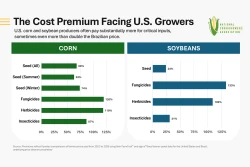
Analysis of 2023–2025 prices found U.S. growers paid more for nearly every seed and crop protection category examined.

Six technologies advance toward commercialization, with the first product expected in late 2026, despite criticism from environmental advocacy groups.

The company says the action is needed to preserve domestic production, but major commodity groups argue the trade case will come at farmers’ expense.

After waiting months for much-needed moisture, heavy rainfall is turning early-summer fieldwork into a high-stakes scramble for some Midwest farmers.

Promising new technologies are entering the market, but large-scale corn and soybean farmers often face a frustrating bottleneck.

Understand the growth stage cut-offs to keep your post weed-control practices on-label and effective.

East-central Iowa field agronomist says misjudging corn growth stage, not herbicide choice, can be the biggest risk in post-emerge passes.

Given the weed’s yield-loss potential and long emergence pattern, farmers in its path are taking notice and putting control measures in place.

As producers navigate financial strain and D.C. disconnect, realities such as steep input costs, trade frustrations and E15 limbo are becoming decisive factors shaping the rural vote.

Corn stalks, straw and cover crops are impacting weed-control results, requiring farmers to make tactical adjustments.

The problem is making it difficult for farmers to know which herbicide chemistries will still work in their fields.

Operating on negative margins and facing a “next-generation crisis,” a group of row-crop growers urges the U.S. Supreme Court to follow science over emotion as it hears oral arguments in the Monsanto v. Durnell case on Monday.

Two Midwest growers say increased competition between corn and soybeans for acres could help rebalance supplies and provide a financial boost.

Research shows skipping the right tank-mix partner can reduce control of tough broadleaf weeds and grasses by 25% to 90%.

Agronomist Eric Beckett shares strategies for managing tillage, product applications and budgets despite what’s shaping up to be a dry and potentially windy spring.

Before you leap, check out these essential management steps from Missouri farmer Todd Gibson and Farm Journal Field Agronomist Ken Ferrie to help you mitigate risks and protect ROI.

With the EPA reinstating labels for three over-the-top products, Nate Eitzmann explains how this returning tool fits into 2026 weed control plans—and why stewardship is more critical than ever.