
Fungicides

Corteva will pay $35 million to 12 states and accept 10 years of limits on distributor rebates that the FTC says kept cheaper generic pesticides away from farmers. The case against Syngenta continues.

Crop protection, seeds and digital tools could be rolled into a standalone company by middle of next year.

Barbell, beer can and banana are descriptive names for abnormal ear shapes that show up every season and cause yield losses — problems growers could avoid more often by tuning into three factors researchers refer to as GEM.

Increasing numbers of corn and soybean growers are looking for lower-cost inputs to preserve and protect yields.

USDA ratings show that the nation’s crops lag behind Iowa’s current strong performance, while drowned-out areas and weather stress in Illinois could deliver harvest disappointments.

From inaccurate dry measurements to unseen water issues, simple mistakes and overlooked details could be neutralizing your crop protection investments.

Mike Jenks shares how he reconfigures nozzles, boosts carrier volume and evaluates application timing to protect the leaves that drive grain fill.

With tar spot at fairly low levels, Midwest agronomists encourage farmers to focus on protecting the upper canopy, keying into the best application timing and keeping an eye out for southern rust.

Ken Ferrie leads the unsponsored, two-day event focused on crop fertility ROI, weed management and making the 4Rs pay in tight markets.

From sulfur and nitrogen deficiencies to silk-clipping beetles, Ken Ferrie breaks down what farmers need to address now in ponded, replanted and unevenly developing fields.

Two Midwest farmers report they are ready to treat corn acres, but uneven stands and tight margins cause hesitation for soybean applications.
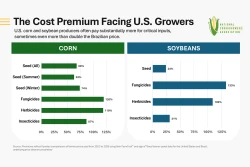
Analysis of 2023–2025 prices found U.S. growers paid more for nearly every seed and crop protection category examined.

Unexpected disease patterns, shifting crop susceptibility, and fungicide resistance are changing every spray decision.

The proposed framework introduces a targeted approach to safeguard endangered species while maintaining essential crop protection tools for U.S. farmers, the agency reports.

Two Midwest growers say increased competition between corn and soybeans for acres could help rebalance supplies and provide a financial boost.

Corn growers and agronomists share their top five strategies for staying ahead of problems such as northern corn leaf blight, tar spot and the much-dreaded southern rust.

Safeguard your investment with the strategic use of seed treatments and inoculants.

Before you leap, check out these essential management steps from Missouri farmer Todd Gibson and Farm Journal Field Agronomist Ken Ferrie to help you mitigate risks and protect ROI.

Farmers prepare for a 4% to 6% increase in chemical budgets as trade duties on key active ingredients set a new price floor.

Drift reduction adjuvants help keep products where you want them in the field and deliver measurable yield results.

Crown rot is showing up more frequently in Midwest cornfields. Plant pathologists say it’s likely a multi-pathogen disease and offer five practical ways to address it this season.

A detailed “farming playbook” can help guide essential input investments and maximize ROI.

Preemptive control of heavy-hitting diseases like white mold, frogeye leaf spot, Cercospora leaf blight and others is now possible thanks to specially designed soybeans that act like an early warning system, enabling proactive fungicide treatments and yield protection.

Going into the final weeks of the year, many growers across the country are shouldering significant financial strain from land rent payments, rising input costs, and efforts to stay in business and viable until commodity prices improve.

Because every growing season is unique, agronomists are encouraging corn growers to make a management plan for the “driver diseases” they’re most likely to encounter in fields next year.

The fungal disease has spread to fields in at least seven states since 2018, including three new ones just this year. Once established, the pathogen is nearly impossible to eradicate, Extension plant pathologists report.

AgZen’s first product, RealCoverage, can be bolted onto any sprayer and is the world’s only sensor and AI-based system that measures and optimizes the number of drops of crop protection products applied to crops.

Planting more cover crops this fall is one way corn and soybean growers are addressing their 2026 nutrient needs and looking to trim expenses in the process.