
The Scoop
Latest News

With one survey showing 48% of Midwest corn and soybean growers are unable to afford traditional fertilizer sources, Extension and industry are responding with nutrient options that can lend support.

Industry veteran Kessler takes the helm of Brandt’s 18-location retail network, signaling a renewed focus on local expertise and operational growth in the heart of the Corn Belt.

New data shows that winning in 2026 requires a ‘digital handshake'—using technology to remove friction while keeping the relationship front and center.

Record corn yields have risen 10x in 100 years. David Hula says continued genetic gains, along with a deeper understanding of what’s happening underground, could push yield potential far beyond what most farmers expect.

With cold, wet weather moving across parts of the Corn Belt, agronomists advise farmers to be ready to check high-yielding genetics for crown and stalk rot.

Ag Secretary Brooke Rollins says a multi-agency Trump administration effort will target fertilizer costs and boost U.S. production, with a major announcement expected yet this week.

In total, an estimated 2 trillion gallons of water were dumped on the state’s countryside, leading Hawaii’s governor to label the event the most severe flooding since 2004.

Centuro A-PRO is a more concentrated formulation of the original Centuro, containing a higher concentration of the active ingredient, Pronitridine.

Operating on negative margins and facing a “next-generation crisis,” a group of row-crop growers urges the U.S. Supreme Court to follow science over emotion as it hears oral arguments in the Monsanto v. Durnell case on Monday.

Following a major stakeholder meeting, USDA is boosting survey sample sizes and moving data-focused offices out of D.C. to rebuild farmer trust and improve the accuracy of its agricultural reports.

New state laws and a county-wide broadband network are turning science fiction into reality, allowing autonomous tractors and drones to revolutionize the nation’s leafy green production.

To raise your total farm yield average, Connor Sible recommends starting the planting process in your lower soil-testing fields, once they’re fit, and then transitioning to planting higher soil-testing ground.

With clear benefits in a pilot program, Syngenta and Taranis are expanding the footprint for a new sustainability project.

Two Midwest growers say increased competition between corn and soybeans for acres could help rebalance supplies and provide a financial boost.

As fertilizer prices climb and supplies tighten during geopolitical turmoil, Hylio’s Arthur Erickson says precision drone technology is helping farmers cut input costs while protecting yields.

It can take a few days to assess actual damage results following a frost. Ferrie offers four recommendations on how to do your initial evaluations.

The nation’s corn crop is currently 11% planted, sitting 2 points ahead of the five-year average. Although many Illinois farmers are waiting to plant because of wet conditions, much of the latest national crop progress comes from Illinois and Indiana.

In this OpEd, Daren Coppock, president and CEO of the Agricultural Retailers Associations says “preserving uniform federal labeling protects everyone who depends on the food system—and that means all of us.”

Industry leaders shed light on the reality of the 45Z tax credit and how it is already reshaping supply sheds.

Tim Webster and Steve Crothers share their cropping plans, telling Ken Ferrie they hope to bounce back this season from record low rainfall and extreme heat in 2025.

A Farmer’s Keeper survey of 4,000 farmers shows 20% are cutting corn acres as record fertilizer prices and supply gaps force last-minute shifts toward soybeans and other crops to protect profitability.

Illinois grower Stephen Butz is uber-focused this season on removing the hidden barriers that have kept his bean crops from reaching their true potential.

Reaching levels rarely seen since 2013, historic dryness grips the eastern Corn Belt, the Southeast and into the western Plains. With 68% of winter wheat in drought, producers face potential abandonment.
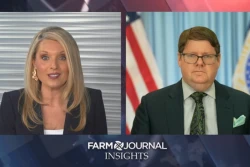
In a candid conversation with Farm Journal, USDA Deputy Secretary Stephen Vaden says USDA’s message to fertilizer companies is simple: “Be part of the solution, don’t be part of the problem.”

Temple Rhodes explains how moving away from front-loaded fertilizer use to what he calls a “layered, systematic approach” — using nitrogen, phosphorus and biologicals — is helping him build corn yields despite increased regulatory demands.

Four ways artificial intelligence helps these farmers manage their business.
“When farmers struggle, independent ag retailers like our business feel it immediately,” Mike Twining shared.

Research shows skipping the right tank-mix partner can reduce control of tough broadleaf weeds and grasses by 25% to 90%.

Here’s a roundup of the CEO announcements from across the U.S. ag retail cooperative landscape.

University of Illinois researcher details scenarios in corn and soybeans where biological products can provide value.