
INPUTS

A new report commissioned by NCGA and ASA found 90% of 1,200 farmers surveyed say they are more or equally concerned about their farm financials than a year ago.

After a growing season with multiple windstorms, tornadoes and 15" to 20" more rain than normal, Cody White in Maroa, Illinois is seeing corn bushels 25-30 bushels lower than last year.

Diesel costs for US farmers are double last year’s level, pressuring food transport and retail.

Sulfur prices have surged more than fivefold, threatening phosphate fertilizer production. With global supply tightening, farmers could face higher prices, or even fertilizer shortages, heading into the months ahead.

“I’ve spent less than 35% of normal chemical costs so far this year,” Orin Romine says. “It’s not complicated. On my operation, the math works.”

Two months after a NCGA study showed U.S. farmers pay double what Brazilian farmers pay for some crop inputs, Iowa’s senior senator is asking President Trump to step in.

Farmers face potentially thousands in added costs as diesel inventories hit 40-year lows.

From fragile Wisconsin ground to deep Illinois prairie, Andy Benson and Ryan Frieders are adapting their soil-management practices to keep inputs working effectively, yields improving and their respective farms on course for a brighter future.

Increasing numbers of corn and soybean growers are looking for lower-cost inputs to preserve and protect yields.

Sentiment in the July Ag Economists’ Monthly Monitor is improving and no one sees the downturn deepening, but interest rates, elevated input costs and corn’s shaky price outlook still cloud the path to 2027.

Fritz Haber found the means to both feed and kill the masses, unleashing a surreal chain of genius, suicide and Nazi atrocities, all toe-tagged to the wildest contradictions in history.

Researchers estimate a glyphosate ban could cost Illinois corn and soybean growers $300 million to $609 million a year.

Heightened tensions in the Middle East are creating renewed Strait of Hormuz uncertainty. Josh Linville explains why fewer vessels, rising risks and global uncertainty could drive fertilizer prices higher for fall.
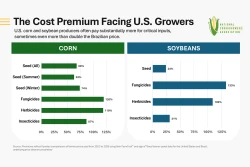
Analysis of 2023–2025 prices found U.S. growers paid more for nearly every seed and crop protection category examined.

The company says the action is needed to preserve domestic production, but major commodity groups argue the trade case will come at farmers’ expense.

USDA says Trump’s executive order suspending phosphate duties could cut fertilizer prices by about 22%, saving U.S. farmers an estimated $1.82 billion annually across 97 million planted acres.

The Executive Order signed by President Trump Monday comes after years of farmer lobbying against phosphate duties, with Texas A&M estimating $6.9B in added costs since 2021 tied to sharply higher DAP fertilizer prices.

The May Farm Journal Ag Economists’ Monthly Monitor reveals growing concern over farm profitability, rising debt costs and long-term financial stress, with economists saying many operations may need significant restructuring to remain viable.

Producers report mounting pressure from higher diesel, fertilizer and machinery expenses, alongside trade uncertainty and rural healthcare concerns, as policy impacts and election-year sentiment weigh on the farm economy.

Diesel prices are just 20 cents from a record high, with multiple states already setting new records. Experts warn relief is uncertain as prices could remain elevated through 2026.

Former NFL player Cody White applies his athletic experience on the field to rising input costs and market volatility in DeWitt County, Illinois.

Ag Secretary Brooke Rollins says a multi-agency Trump administration effort will target fertilizer costs and boost U.S. production, with a major announcement expected yet this week.

Centuro A-PRO is a more concentrated formulation of the original Centuro, containing a higher concentration of the active ingredient, Pronitridine.
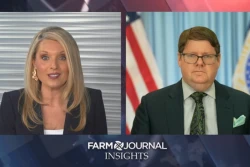
In a candid conversation with Farm Journal, USDA Deputy Secretary Stephen Vaden says USDA’s message to fertilizer companies is simple: “Be part of the solution, don’t be part of the problem.”

As the Iran war drives fertilizer prices up 40%, the Trump administration is warning against price gouging. A new survey shows only 60% of corn farmers have secured their nitrogen needs for 2026.

While an unexpected March freeze is causing some farmers in Mississippi to replant corn, a mild spring is spurring early planting, with some farmers reporting they’ll finish planting corn by the end of this week.

As the five-year sunset review begins, corn growers are urging regulators to scrap phosphate duties they say have restricted supply and cost U.S. agriculture $1 billion each year.

Fertilizer prices were already elevated, but they’re now surging just weeks before spring planting. What can be done to ease costs in the short term as well as fix the problem for good?