
Cost of Production

Blaming monopolies for high fertilizer costs misses the real culprit: complex global supply chains. Fighting costs requires open dialogue, not endless lawsuits.

Increasing numbers of corn and soybean growers are looking for lower-cost inputs to preserve and protect yields.

From inaccurate dry measurements to unseen water issues, simple mistakes and overlooked details could be neutralizing your crop protection investments.
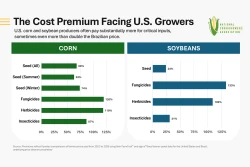
Analysis of 2023–2025 prices found U.S. growers paid more for nearly every seed and crop protection category examined.

The request allocates $10 billion to row and specialty crop producers for crops planted in 2026, with the remaining $1.1 billion designated for Florida farmers hit by winter storms in late 2025 and early 2026.

Sidedressing is often the best opportunity in-season to address corn nutrient needs, but Ken Ferrie urges caution if you plan to go with “blind sidedressing” before the crop emerges or at spike. He offers three considerations.

Tim Webster and Steve Crothers share their cropping plans, telling Ken Ferrie they hope to bounce back this season from record low rainfall and extreme heat in 2025.

Illinois grower Stephen Butz is uber-focused this season on removing the hidden barriers that have kept his bean crops from reaching their true potential.

As the Iran war drives fertilizer prices up 40%, the Trump administration is warning against price gouging. A new survey shows only 60% of corn farmers have secured their nitrogen needs for 2026.

Today’s market is evolving, not just correcting, according to ag economists. To win the long game, farmers are using generics and delaying machinery purchases as trade shifts to allies and consumers demand premium meat portions.

Fertilizer prices were already elevated, but they’re now surging just weeks before spring planting. What can be done to ease costs in the short term as well as fix the problem for good?

High-yield growers David Hula and Randy Dowdy say three things deserve your sharpest focus now: your planter, fertility program and seed.

Will 2026 be a repeat of 2016? Chris Barron, Ag View Solutions, shares four strategies to help farmers capture some profit in this down cycle.

A detailed “farming playbook” can help guide essential input investments and maximize ROI.

Planning for next season? Review the expert insights and recommendations from farmers and field agronomists on how to reduce costs and strategically reallocate resources.

USDA’s Brooke Rollins says the financial details will be unveiled next week. Some groups estimate payments could total in the neighborhood of $12 billion. “There’s people that can really use them. Everyone can use them…but we’re not getting real solutions,” says one Iowa farmer.

Several years of low commodity prices, high input costs and thin margins have taken a toll on soil stewardship in some parts of the country. As a result, farmers need to use caution and do their homework before renting ground that’s coming available in their area for 2026.

The companion piece to the Senate’s Fertilizer Research Act of 2025 has the same, ultimate goal: to provide U.S. farmers with more clarity on the pricing of crop nutrients, lawmakers say.

Corn yield champs say annual soil testing is the best way to make sure fields are up to the goal of delivering profitable high yields every season.

Some row-crop growers are converting acres, banking on long-term opportunities with beef. Others are staying the course with crops but embracing ways to add some dollars to their bottom line in the short-term.

With low commodity prices and higher input costs, identifying hybrids that are a good fit for your soil types and environmental conditions is more important than ever – and can give you a leg up on yield performance from the get-go next spring.

As Jed Bower takes the helm at NCGA, he is working to expand market opportunities in the U.S. and abroad, and looking for practical ways to reduce regulatory burdens on farmers.

Microscopic particles improve efficacy and could save farmers money on input costs.

Survey results from University of Illinois ag economists show how farmers are making corn and soybean nutrient plans for 2026 and what current price trends are for N, P and K.

Farm Journal’s September Ag Economists’ Monthly Monitor found nearly half of the ag economists surveyed say the U.S. ag economy is worse off than a month ago and will remain depressed or even worsen over the next 12 months.

There are no easy answers to address the cost of fertilizer and other inputs, but having conversations with suppliers and financial providers now can help you leverage your buying power and minimize potential impacts from marketplace uncertainties.

While application season is still weeks away, retailers and other suppliers are encouraging farmers to reserve product now.

Use one or more of these tips to reduce expenses, reallocate resources and build a fertility program that works well for your farm and gives you some peace of mind in the process.