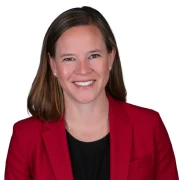

Chris Shinker, Procurement Manager for Generic Crop Protection at Novus Ag, describes the company as the first franchise model of ag retail.
In this interview with brand leader Margy Eckelkamp, he says post-patent generics can help growers get the right agronomics at a better price and deploy their cash more efficiently, even as innovation shifts from new molecules to new formulations and production processes.
Margy: Help us understand a little bit about your role, and a bit about your day-to-day at Novus Ag.
Chris: Procurement, for Novus, is essentially my job is relationships, right? With vendors, suppliers, not only vendor suppliers, but our LLCs as well, negotiation positions, making sure our guys are always in a good spot. We’re a unique kind of a model to ag retail and so we move really quick and pretty rapid, and so I spend my day-to-day monitoring positions, checking generic CP markets, whether it be imports and those things, and then managing relationships with our line partners.
Margy: You talk about how Novus Ag, you guys are taking a bit of a unique approach in the industry. Just structurally, help folks understand why you say you guys look different.
Chris: I think for our story with Novus, the really short version is, view us as the true first franchise model of ag retail. So Novus Ag is the overall arch of the umbrella, and then our people are invested into their business, and we support them from all the back office stuff. We really allow entrepreneurs that are really good at selling or running a retail business to focus on what they do good, and then we support the back side, whether it be HR and procurement and capital and those types of things. And so it’s really unique versus what the traditional retail is, and I’ll speak this on Tommy Warner, our owner and founder’s behalf, our goal is to challenge the status quo of traditional retail, right?
Margy: Generic products are both an opportunity as well as seeing their own pricing pressure. So, how do you categorize the types of products that you’re helping bring through the retail channel as we head into 2027? What’s the market look like?
Chris: That’s in a lot of people’s minds today. Specifically this year, with pyroxasulfone, Zidua, coming off patent is huge, right? Our focus has always been to blend, not only with basic manufacturers, to have a really comparable brand of 50-50, to make a unique approach to a grower, and essentially what our goal is, is to view it from buying chemistry instead of products, right? If we can buy chemistry, we at least have as good of an advantage as we can have today, instead of buying a product that is based on a price specific to the product, right?
We still promote agronomics, and with us, the uniqueness of us not really being bound by loyalty is we get to work with chemistry, and work with those suppliers to make sure that we’re building the best agronomic programs for growers, without being bound to a specific product that comes with a set price, right? Which is really our goal today, which is, I think, a true value to growers, is to say, let’s make sure we’re getting the right agronomics for the price, and make sure you can capitalize and maximize your deployment of cash, right? Because farming’s hard, and it’s not getting easier. So where we can maximize that, it gives them an opportunity to earn more bushels, instead of just trying to fix a cost and run out, right?
Margy: What is that conversation like? What do farmers want to know from a retailer when they are perhaps looking at a generic product versus a branded product? Where do their concerns lie?
Chris: I think traditionally, and it’s not changed, in our opinion today, growers want dead weeds for the best price they can gather, right? They also still want to make sure that they’re doing safe and proper agronomic practices, right? And making sure that they’re not going to be caught without any support, right? So I think really just entrusting that we want the best price we can for clean fields.
We also want to make sure that we’re not utilizing something that maybe is a poor quality product, is not going to apply the right way, or is going to provide potential injury on my crop, right? And that’s been the biggest challenge with generics, is just the understanding that there’s a perception, probably, that they’re less quality. Really probably not the case, in most instances. Generic companies today have evolved so much that they care about their business as well, and so they’re not generally bringing a poor quality product to market. They’ve invested as much into formulation today just as anybody else. And so that is what I would say the conversation at the farm gate is, is just ensuring that if I’m going to utilize some of these post-patent opportunities, ensuring that I’m still getting a quality product that’s going to give me good results.
Margy: A lot of folks talk about the patent cliff, and the number of products that are going to be coming off patent. How do you think we are positioned today as an industry in terms of that evolution of those generic opportunities that could be coming forward?
Chris: I think we are, as long as we are willing to adapt, and accept that innovation is getting smaller and smaller, and specifically in the synthetic world. We need to keep an open mind, we need to be able to adapt, right? Whether or not it’s with a basic or with a generic, innovation is coming now in different capacities, right? Instead of it being a new molecule, it’s a new molecule to a specific crop, or it’s a new formulation, or a production process on an old molecule, right? We’ve seen that with Sonic Boom at Corteva, and Preview at UPL, where we’ve taken two very, very old molecules, but they have invested a lot of time into making sure they can adjust the process to make it different than it has been in the past, by just taking those and combining them as straight goods.
The challenge is going to be us to accept and adapt that innovation now is going to look different, because we have to innovate based on what we have, because there’s not a lot of pipeline products coming. The pipeline’s getting thin. So we have to make sure we’re utilizing and understanding chemistries, and reverting back to old-school chemistries. That’s what we’re doing today with a lot of them.
Margy: You alluded to the Novus Ag business model, that franchise-type structure. What are you and the team proud of that you’ve brought to retail?
Chris: I think the Novus team is proud that what we have brought is differentiation, right? We’ve come into a very traditional and structured type of industry, and we’ve allowed opportunity for not only our people, but our grower clientele to have a different outlook, and a different channel to supply their inputs. People that view things differently than just what the status has always been. We always try to challenge our people and our growers to understand that being efficient today is key, whether you’re talking about in-field practices, the way you purchase, utility of fertilizers, maximizing your acre today is key number one.
We’re very proud of just providing the opportunity to all that says, hey, we want to do things differently. We want to provide you a different opportunity that can be more efficient to your farm or to your business, by getting the same result, which is still rooted in agronomics and good practice.
Margy: I want the Chris crystal ball, okay? What do you think is going to look different about ag retail 5 years from now?
Chris: I think there’s probably a lot of different answers you could take. From my perspective, I think ag retail is going to continue to evolve into a place where people utilize somebody for being a specialty expert, right? I’ve seen it with seed. Growers naturally are evolving and they’re leaning and following the independent seed models that are strictly focused on their seed needs, right? And I think that’s huge, because those guys want to focus and be your seed partner. I think you’re going to start seeing that in the CP world as well, is people wanting to be your CP advisor, and focus on that, because that’s very important, and not maybe be what’s traditionally been just an a la carte type approach.
I see that involvement. I also see it just because there’s more and more growers today trying to be the best they can at being self-sufficient, right? Whether they’re applying their own herbicides, fungicides, fertilizers, the technology that we have today at our fingertips as well is creating opportunities for growers to really be more of a self-managed system, because they have all this access to data, right? And so that would be what I personally feel like ag retail is going to shift and look like, is more of a specified approach to a specific shelf, if you would, I guess.
Margy: The catalyst for you coming on the podcast was you were named as a 40 Under 40 awardee, so congratulations! What words would you share with someone else who’s in the first half of their career in ag retail?
Chris: I think the biggest thing I would say is, be open to opportunity, right? Whether you want to explore an opportunity or take an opportunity, it’s a big industry, but it’s very small. And so always be open and willing to explore opportunity. Align yourself with the right people that share your quality and characteristics. For me personally, it’s huge that I operate on integrity, character, and just doing what I say I’m going to do. Those three things, I firmly believe, if you can do those, you’re 75% there to getting to where you want to be in a career path.
My biggest advice to people is be open, and just make sure that you always do things with integrity, because even in the short-term picture, you’ll win long-term, right? The long-term goal is probably what I would say, be open to that, and make sure you stay true to who you are, and just have integrity.
Margy: If folks want to learn more about Novus Ag, where would you direct them to?
Chris: Novusag.com. They can go there and find a lot of information regarding our member network, the foundation, where it was founded, what was the purpose, and then as well as proprietary information and proprietary lines that we offer.