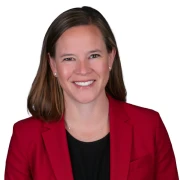

Keystone Cooperative’s newest investment is not in another retail facility, grain asset or product line. Instead the nearly 100-year-old farmer cooperative is taking a seat at the agtech startup table. The co-op will soon celebrate 100 years, and Logue says the organization’s history was built by leaders and farmer-owners willing to invest beyond the immediate business cycle.
The Indianapolis-based cooperative has joined Alloy Partners’ One Health Studio as its newest corporate partner. The venture studio, launched in November 2025 with founding partners Elanco Animal Health and the State of Indiana, is focused on creating and scaling companies at the intersection of animal, plant and human health.
For Keystone, the move is both an ag retail strategy and a farmer-owner strategy.
“This is what the co-op does. We’re always looking for what’s next for the farmer,” says Scott Logue, incoming CEO of Keystone Cooperative. “We don’t have quarterly return targets that we have to hit. We get to take the long view and look out for our members.”
Keystone serves more than 20,000 farmer-owners across Indiana, Ohio, Michigan and Illinois, with business units spanning agronomy, energy, grain, animal nutrition and swine production.
As startups, food companies, health companies and animal health innovators move closer to the farm gate, will ag retail simply help commercialize finished technologies, or will it help shape those solutions from the beginning?
Connecting Crops, Livestock and Human Health
Logue says Keystone wants to be involved early, in part because the opportunities emerging around One Health could ultimately flow back to farmers.
“We’re owned by the farmers, and this could be the next evolution of what their crop production means to human health,” he says.
One Health is often described as a multidisciplinary approach that recognizes the connection among people, animals, plants and the environment.
“The big-picture concept is: What can we grow that can go into the food chain, or what can we grow that gets fed to our livestock that can create human health benefits?” Logue says. “What can transition through those animals, or through the grain that we’re producing, that ultimately helps solve health issues?”
The One Health Studio is located in Indiana’s One Health Innovation District and has already moved eight concepts into incubation, according to Alloy Partners. The studio is led by serial founder Ben Lewis and brings together research institutions, investors, corporate partners and entrepreneurs to launch new startups based in Indiana.
For Keystone, its seat at the table comes at a time when the cooperative is thinking about its next century. The co-op recently celebrated 100 years, and Logue says the organization’s history was built by leaders and farmer-owners willing to invest beyond the immediate business cycle.
“We’ve done that because the leaders, the employees and the farmer-owners before us have taken some of these risks,” he says. “They’ve been very innovative. They’ve taken risks and challenges to see what they could do to move agriculture forward.”
Logue says this latest investment is one more examples of how Keystone is investing for the next generation.
“Our challenge is not to just be the great co-op today,” he says. “It’s to be the great co-op for future generations. And we won’t get there if we don’t take some chances and look at opportunities.”
What Could It Mean for Farmers?
The studio model is built around identifying concepts, incubating companies and scaling ideas, which means not every venture will become a commercial success.
“You’re not going to win with everything, by any means, we know that,” Logue says. “But let’s get a win in the next three years, and let’s have some things that are close, and just keep pushing forward with it.”
A win, he says, would be something Keystone can eventually bring back to its farmer-owners. That could take different forms. It might involve new crops, specialized feed ingredients, livestock production systems, animal health tools or food-system innovations tied to human wellness.
Logue points to the cooperative’s livestock and feed businesses as especially relevant.
“With us growing pigs ourselves, managing a tremendous amount of livestock for another partner, and then having some large integrated farmers that we supply feed to, this is a tremendous opportunity for the farmer,” he says.
He also sees protein demand as part of the long-term backdrop.
“Protein is a wonderful revenue stream for our farmers,” Logue says. “That revenue comes back to our farmers and allows us to invest in the facilities and the asset improvements they need to set us up for the future.”
A Signal for Ag Retail
The connection — from consumer health back to the land — is where Keystone sees opportunity for farmers and ag retailers alike.
“A farmer-owned cooperative, a farmer-owned solution, is very supportive and serious about how this could impact the consumer from a health standpoint,” he says. “It will ultimately funnel clear back to the ground. It’s all going to go back to the land, and the farmer’s going to be the one at the forefront of this eventually.”
“If we help the consumer, we help the farmer,” Logue says.
For ag retailers, that could mean a role that extends beyond supplying inputs or providing agronomic recommendations. It could mean serving as a bridge between emerging consumer-driven markets and the farmers who will need to execute them in real-world production systems.
Logue compares the potential shift to the ethanol boom of the early 2000s, when local grain markets and farmer economics changed as corn was increasingly processed closer to home for energy.
“To me, it feels similar to the ethanol boom,” he says. “The farmers at that time, when the ethanol boom was really happening, were changing the way grain was being processed.”
Before ethanol’s rapid expansion, Logue says more grain moved by rail or barge toward export channels. Today, more of that grain is processed locally into energy, creating new local demand and economic value.
“It’s been a tremendous benefit to the local farmer,” he says. “It just changes the whole economic outlook. This feels like it could be that next phase of agriculture — how this directly impacts the crop farmer.”
Building What Comes Next
Keystone joins Elanco as a corporate investor and partner in the One Health Studio, and Alloy Partners says additional partners are expected in the coming months. For Logue, the strength of the model will depend on aligned partners and a steady pipeline of ideas that can eventually create value for farmers.
“We’re very excited,” Logue says. “Hopefully we’ll have some other great ag partners step into this and partner with the group, and it could be a huge win.”
His bottom line is simple: “Ultimately, if the farmer wins, we all win.”