
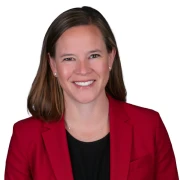

A grower might deal with a seed salesman, an agronomist, a location manager and an admin, all from the same retailer.
At United Prairie, a 13-location ag retailer based in Tolono, Illinois, CFO Dakota Patton wants to simplify that. “The way I try to look at it is less hands in the cookie jar, right?” he says. “How can I get you all the information you need, when you need it?” United Prairie runs on Agvance and launched a grower portal with AgVend, which Patton says “has taken off tenfold for us.” Growers use it, the operations team buys products through it, sales staff forecast with it, and now the retailer is looking at adding financing, with the goal to “just make it a one-stop shop.” Patton, a member of the latest 40 Under 40 awardee class, says it comes down to meeting farmers where they are. Growers often work at midnight or 1 a.m., and as a younger generation takes over, they expect what everyone else now expects: everything “at your fingertips.”
Podcast Q&A: Dakota Patton, CFO, United Prairie
Q: I first got acquainted with you guys at United Prairie and the leadership team when you were named as our Business Innovation Award winner just a few short years ago, but for folks who might not be familiar with United Prairie, first just tell us a little bit about your guys’ ag retail business.
A: We are a small ag retailer with about 13 locations right now, based in East Central Illinois. We don’t cross over in any other states. So basically, Tolono’s just south of Champaign, so a lot of us are big U of I fans, but we branch all the way over to just west of Bloomington, down a little bit south of Shelbyville, and then up to Crescent City. So, all based right in Central Illinois.
Q: As Chief Financial Officer of a business made up of 13 locations, tell us a little bit about your role.
A: I was brought in in 2020 as a controller. We had our CFO, Tom Beach, [who] was a great mentor of mine, and he retired, and [I] kind of filled those shoes here in the last two years.
Basically, with us growing bigger and bigger, of course, it just went from day-to-day books was the big thing, and then it started turning into: How do we handle financing? How do we handle our loans? How do you handle purchasing product? Just all of that, what comes in financial-wise. We’ve grown bigger and bigger, and money, as you know, with the economy, is a little tighter. So how can we go farther with less is a big thing there.
Q: Let’s talk about those tools that help you manage a complex business while also having those pressures of doing more with perhaps less. What tools are you really using and finding helpful today?
A: Our biggest ERP is Agvance, based out of Shelbyville. They’re a huge help, huge asset, love their software, very easy to work with. So that’s kind of our main driver that I’m in most of the time.
When we won the award a couple years ago for the innovation, we partnered with AgVend to have a grower portal side. Well, that has taken off tenfold for us. Not only on the grower side has [it] been a love — our operations team uses it to purchase products on the internal side, so training them for a one-stop shop. A lot of our sales staff is starting to use it more with forecasting tools, so building a bunch of reports for them all the time.
And then, the same token, now we’re looking at diving [into] the financing side of there. You know, something I’m a big fan of, with our finance manager, we look at how can we just make it a one-stop shop. So it’s been fun and interesting, I’m not gonna lie, of how that partners as well, but those are the main two things we use most of the time. Then, of course, being the accounting guy, the numbers guy, I live in Excel, so I can’t argue that one or get away from that.
Q: So, Dakota, not only are you really managing the business of United Prairie, but you’re also keeping your farmer customers top of mind. What are those farmers needing from you guys today as their retailer in the dynamic environment we’re in?
A: The thing with growers is they have so many needs. They have so many point of contacts, right? You look at a grower, they can have a seed salesman in our line of business, they can have an agronomy guy, they can have a location manager for selling them or putting on the products, they can have an admin for getting their bills.
The way I try to look at it is less hands in the cookie jar, right? How can I get you all the information you need, when you need it? We know a lot of growers, they don’t work our hours, right? They’re not a normal 9 to 5, so when can you get them that information? So that’s always top of my mind.
You know, I’ve got plenty of family and friends that do farm, where it’s like, hey, they’re working at midnight, they’re working at 1, I gotta shoot this email. So how do we get this information to them faster, or where they don’t rely on us as much? So that’s always in the back of my mind, of how would my friends want that help? So what can we get to them?
Q: Regarding some of the tough economics that farmers are facing, are you guys at United Prairie doing anything specific in response to that, to help farmers through?
A: On that piece there, what we’ve looked at is, okay, how can we be the most efficient as possible, right? That we can drive our costs down on that? Because the problem is, if we’re not efficient, then our expenses are through the roof, and then that gets passed along, that we have to keep our doors open, right? What we’ve done is we have just looked left and right and started cutting certain things that maybe it was more of a want than a need.
And it really is a self-reflection of, hey, these tools, maybe we don’t need them. Hey, maybe this extra machine we don’t need. It’s not a fun conversation by any means. I mean, nobody wants to think about that, but at the end of the day, the growers are what keeps our doors open, so we have to do what’s right to them, right, so then we can stay in business as well.
Q: So let’s shift gears, and let’s talk about the future of ag retail a little bit, because you are named as a 40 Under 40 recipient from The Scoop, so congratulations! And when I have folks who are part of that 40 Under 40 awardee class, I like to ask: What would you share with others who might be on the front half, or the early chapters of their career in ag retail?
A: Well, first off, thank you, Margy. I mean, this kind of caught me off guard, I’m not gonna lie. I was very ecstatic when I heard about it, so again, thank you very much.
But I’ll be honest with you, when I started in 2020, I did not come from ag at all. You know, I worked for a pharmaceutical side, so a lot of it was actually pretty similar, shockingly. But, I mean, at the end of the day, you look at all the hard work you put in. You know, the retail side is changing, right? Over the last six years, it has been drastically changing, and I’m not saying for a bad way by any means, but you look at how technologically it was maybe behind a little bit. Now, how can we get in front of our growers to do stuff where they can get it at their fingertips?
I mean, I’ll be honest with you, I don’t think I pay any of my bills by checks anymore, right? I mean, everything’s at your fingertips. So it’s the same token of when you get the generations that maybe are starting to phase out a little bit more, and you get the younger ones coming in, how do you help them out?
And that’s just been my mindset: not a self-centered one, but how do you help out the next group coming in? And think about, you know, kind of a servant leadership, I would say. What can I do to help them? You help them out, they’ll take care of you, and that’s just the thought process on it.



